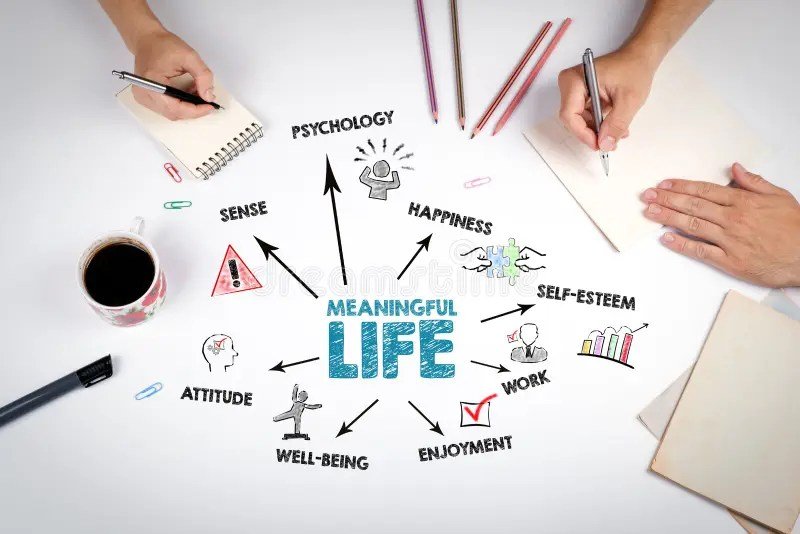
Life often feels like a relentless pursuit, doesn't it? We chase goals, accumulate possessions, and fill our schedules, yet a gnawing question persists beneath the surface: Is this truly meaningful? The quest for a meaningful existence isn't new; it's a timeless human endeavor pondered by philosophers like Marcus Aurelius centuries ago, and today, it's a vibrant field of study in psychology and self-help. Far from being a fleeting emotion, a meaningful life is a profound state of being, actively cultivated through awareness and intentional daily choices.
This isn't about grand gestures or radical overhauls. It's about a subtle, powerful shift: moving from autopilot to presence, from passive existence to active engagement. The path to a deeply fulfilling life is uniquely yours, but it's paved with discoverable practices.
At a Glance: Your Guide to a Meaningful Life
- Meaning is more than happiness or purpose. It involves understanding your life, having goals, and feeling your life has inherent value.
- Conscious living is the practical application of meaning, built on awareness and intentionality.
- Break free from autopilot. Noticing your thoughts and habits is the crucial first step.
- Cultivate positive passions, nurture social connections, and foster belonging. These are fundamental building blocks.
- Manage your mood and environment to create a stable foundation for coherence.
- Engage in daily micro-practices to integrate awareness into every moment.
- Intentionality is key: Regularly check if your actions align with your values.
- Meaning evolves. What feels purposeful today may shift tomorrow, and that's perfectly normal.
Beyond Happiness: What a Meaningful Life Truly Is
Before diving into how to build a meaningful life, let's clarify what we're actually talking about. In psychological terms, meaning isn't just a synonym for happiness or even purpose, though it often intersects with both. It's a distinct, robust construct.
Think of it this way: happiness can be fleeting, tied to immediate circumstances. Purpose is often about your long-term goals or contributions. Meaning, however, encapsulates a deeper, more enduring resonance with your existence.
Experts like Steger and colleagues (2006) describe meaningfulness as having two core dimensions:
- Coherence: This is how well you understand your life, seeing connections between your past, present, and future, and making sense of your experiences.
- Purpose: These are the goals you have, the directions you're moving in, and the sense of driving towards something larger than yourself.
Other models expand on this. Reker and Wong (1988) added a third crucial element: - Significance: This is the profound sense that your life is worth living, that it holds inherent value, and that you matter.
More recently, Heintzelman and King (2014) articulated meaning through components like goal direction (your motivational drive, akin to purpose), mattering (your motivational sense of significance), and the feeling that one’s life makes sense (a cognitive aspect, blending coherence and significance).
In essence, a meaningful life is one where you comprehend your journey, have a clear direction, and feel that your very existence holds intrinsic worth. It’s a powerful, self-authored narrative you live every day. When you're seeking to understand this profound aspect of human existence, you might want to Explore the worth of meaning in all its dimensions.
The Power of Conscious Living: Your Pathway to Meaning
If a meaningful life is the destination, conscious living is the vehicle that gets you there. This practical approach is all about meeting life with awareness, intention, and presence. It means:
- Paying attention: Truly noticing your thoughts, choices, emotions, and how you show up each day.
- Mindful choices: Making decisions aligned with your deepest values, rather than reacting out of habit or external pressure.
- Facing challenges with awareness: Rather than resistance, you approach difficulties with a clearer mind, seeking understanding and growth.
The alternative? Autopilot. Most of us spend a significant portion of our lives on autopilot, driven by ingrained habits, unconscious reactions, and external demands. This is the primary obstacle to cultivating meaning. Breaking this cycle isn't about perfection; it starts with simply noticing.
The Unmistakable Benefits of Living with Meaning
Why invest in this journey? The returns are substantial:
- Increased presence and groundedness: You feel more rooted in the "now," less swept away by worries about the past or future.
- Emotional clarity and deeper satisfaction: Simple moments — a cup of coffee, a walk in nature, a genuine conversation — take on richer hues.
- Living with purpose, not just pressure: Your actions feel aligned with an inner compass, rather than dictated by external expectations.
- Reconnecting with yourself: You build a stronger relationship with your authentic self, your values, and your true desires.
- Clarity, inner peace, and self-understanding: The fog lifts, revealing a clearer path and a calmer mind.
- Profound fulfillment: When your actions are intentional and align with your values, a deep sense of contentment takes root.
- Resilience and well-being: A meaningful life acts as a buffer against illness, loneliness, and depression, particularly vital as we age (Samuelsson et al., 1997; Wong et al., 2014; Jopp et al., 2016).
Ultimately, purpose isn't something you find out there. As Viktor Frankl (1959) famously noted, meaning is revealed internally, emerging through awareness and the alignment of your actions with your deepest values.
Five Pillars for Cultivating Meaning
Ready to actively build that meaningful life? Here are five foundational practices, backed by research, that will help you strengthen your sense of coherence, purpose, and significance.
1. Foster Harmonious Passions
Passions can be powerful forces in our lives, but there's a crucial distinction. Researcher Robert Vallerand (2012) identifies two types: obsessive and harmonious. Obsessive passions can lead to burnout and negative outcomes, as they control you. Harmonious passions, however, are freely chosen activities that hold deep personal significance. They are integrated into your self-concept and enhance your life.
- How to cultivate them:
- Identify what truly lights you up. What activities do you lose track of time doing? What makes you feel alive and engaged?
- Invest time and energy. Dedicate regular, protected time to these pursuits.
- Embody them. Let these passions become part of your identity. If you love painting, think of yourself as a painter, even if it's just a hobby.
- Avoid the "shoulds." Don't pursue a passion because you think you should or because others do. It must resonate with you.
2. Develop and Foster Social Relationships
Humans are wired for connection. Numerous studies confirm that strong social bonds are a reliable pathway to meaningfulness. Loneliness, conversely, dramatically reduces it (Williams, 2007). Heintzelman and King (2014) highlight that making and maintaining connections is critical.
- How to nurture connections:
- Prioritize quality over quantity. A few deep, authentic connections are more impactful than many superficial ones.
- Be present. When you're with others, put away distractions and genuinely listen.
- Share your authentic self. Allow others to see the real you, vulnerabilities and all.
- Proactively reach out. Don't wait for others to initiate; be the one to suggest coffee, a walk, or a phone call.
- Share your harmonious passions. Connecting with like-minded individuals who share your interests can deepen existing friendships and spark new ones.
3. Cultivate Relationships that Foster a Sense of Belonging
Beyond just having social relationships, the feeling of belonging is vital. This is the sense that you fit in, are accepted, and identify with a group or community (Lambert et al., 2013). A lack of belonging can significantly lower your sense of meaningfulness.
- How to build belonging:
- Seek out communities that align with your values. This could be a volunteer group, a book club, a spiritual community, a sports team, or even an online forum.
- Contribute. Don't just show up; actively participate, offer help, and share your unique perspectives.
- Be authentic. True belonging comes when you feel accepted for who you are, not who you pretend to be.
- Give back. Engagement in your community, whether local or interest-based, fosters a powerful sense of connection and shared purpose. You might also find yourself asking how to Explore the worth of meaning in the context of collective identity.
4. Monitor and Manage Your Mood (Coherence)
It might seem simplistic, but your mood significantly impacts your perceived meaningfulness. Positive moods correlate with higher reports of meaning (Heintzelman & King, 2014). This isn't about being artificially cheerful, but about creating conditions that support a stable, positive emotional state, which in turn enhances your ability to make sense of your life.
- Practical mood management techniques:
- Prioritize sleep: Consistent, quality sleep is non-negotiable for emotional regulation.
- Move your body: Regular exercise is a powerful mood booster and stress reducer.
- Nourish yourself: A healthy, balanced diet supports both physical and mental well-being.
- Make time for joy: Schedule activities that genuinely bring you pleasure and relaxation.
- Practice mindfulness: Techniques like meditation help you observe your thoughts and emotions without getting swept away by them, fostering inner peace.
- Limit negative inputs: Be mindful of news consumption, social media, and conversations that consistently drain your energy.
5. Take Control of Your Environment (Coherence)
A chaotic or disorganized environment can contribute to mental clutter and a sense of overwhelm, hindering your ability to find coherence. Conversely, a cognitively coherent environment—one that feels predictable, orderly, and manageable—significantly boosts meaningfulness (Heintzelman & King, 2014). This isn't just about tidiness; it's about creating systems that reduce mental load and free up energy for what truly matters.
- Strategies for environmental control:
- Implement fixed routines: Regular schedules for work, self-care, and household tasks reduce decision fatigue.
- Schedule time for the unexpected: Building in buffer time allows you to handle unforeseen tasks without derailing your entire day.
- Formally schedule downtime: Intentional breaks and periods of rest are as important as productive work.
- Maintain a tidy physical space: A clean, organized home or workspace can lead to a clearer mind. Declutter regularly.
- Digital declutter: Organize your digital files, emails, and apps to reduce visual and mental noise.
- Reduce decision fatigue: Automate small choices where possible (e.g., meal prep, outfit planning) to save mental energy for bigger decisions.
Having a sense of control over your environment reduces the negative impact of challenges, allowing you to respond thoughtfully rather than reactively. This proactive approach underscores the deep connection between intention and the opportunity to Explore the worth of meaning in your everyday surroundings.
Daily Practices for a Conscious Life
Cultivating meaning isn't a one-time event; it's an ongoing process woven into the fabric of your daily life. Here’s how to integrate awareness and intentionality into your everyday existence.
Breaking the Autopilot Cycle
The first, most crucial step in living consciously is simply noticing. You can't change what you're not aware of.
- Start with observation:
- Notice your thoughts: Are they mostly positive, negative, or neutral? Are you replaying the past or rehearsing the future?
- Identify energy drains: What activities, people, or thoughts consistently leave you feeling depleted?
- Recognize sources of peace: What brings you a sense of calm, joy, or groundedness?
- Create space: Awareness isn't judgment; it's simply acknowledging what is. This act of noticing creates a small, powerful space between stimulus and response, a space where new choices can emerge.
Daily Micro-Practices: Small Shifts, Big Impact
You don't need hours for meditation to practice conscious living. Integrate these micro-practices throughout your day:
- Before reacting: Take 3 deep breaths. This simple act can diffuse an emotional response and give you a moment to choose your reaction.
- Mindful eating: Choose one meal a day to eat without distractions. Savor each bite, noticing flavors, textures, and smells.
- Moments of silence: Spend 5 minutes in silence, perhaps first thing in the morning or before bed. Simply sit, breathe, and be.
- Observe thoughts without judgment: When a thought arises, acknowledge it ("Oh, there's a thought about my to-do list") and let it pass, rather than getting entangled in it.
- Sensory check-in: Periodically throughout the day, bring your attention to your five senses. What do you see, hear, smell, taste, and feel right now?
The Power of Intentionality: Asking the Right Questions
Conscious living is active, not passive. Regularly pause and ask yourself:
- "Why am I doing this?" For every task, decision, or interaction, probe your motivation.
- "Does this align with my values?" If one of your core values is connection, are your actions reflecting that? If it's creativity, are you making space for it?
- "Is this nourishing or draining me?" Pay attention to your energy levels before, during, and after activities.
- "What am I truly choosing in this moment?" This question empowers you to move beyond default reactions.
Spiritual Growth: Connecting with Your Deeper Self
For many, a meaningful life involves a connection to something larger than themselves, whether through organized religion or personal spirituality. This doesn't require dogma; it requires introspection and connection.
- Meditation: Beyond simple mindfulness, meditation can be a practice of connecting with your inner self, source, or higher power.
- Journaling: Use prompts to explore your values, purpose, gratitude, and challenges. Writing can reveal insights you didn't know you had.
- Silent reflection: Spend time in nature, listen to meaningful music, or simply sit in quiet contemplation to foster a deeper sense of self and your place in the world.
- Rituals: Create personal rituals that mark transitions, express gratitude, or ground you in your values.
These practices, taken together, reinforce your sense of self and can profoundly Explore the worth of meaning you find in your daily existence.
Meaning in Every Season: Guidance for Older Adults
The quest for a meaningful life doesn't diminish with age; in many ways, it becomes even more profound. Interestingly, older adults, particularly centenarians, often display positive psychological profiles – they tend to be relaxed, easygoing, place a high value on social relationships, possess a positive life attitude, and exhibit low anxiety (Samuelsson et al., 1997; Wong et al., 2014; Jopp et al., 2016). These traits protect against illness and depression, highlighting the enduring power of a meaningful outlook.
While personality traits can be challenging to alter quickly, thinking patterns and daily habits are certainly mutable. Cognitive-Behavioral Therapy (CBT), for instance, has proven effective in shifting ingrained negative thought patterns. For older adults seeking to enhance their sense of purpose and significance, here are specific, actionable steps:
- Make Time for Connection: Actively schedule regular time with friends, family, and social groups. This isn't just about preventing loneliness; it's about nourishing the fundamental human need for connection and belonging. Join clubs, attend community events, or simply initiate regular phone calls or video chats.
- Embrace New Hobbies (or Rekindle Old Ones): It's never too late to start developing a new interest. This could be anything from learning an instrument, taking up painting, gardening, or joining a walking group. These activities become harmonious passions, providing engagement and a sense of accomplishment.
- Express and Share Your Enjoyment: Don't keep your passions to yourself. Journal about what you enjoy, discuss your hobbies with others, or even start a small blog. Expressing your enjoyment strengthens the positive associations with these activities and can inspire others.
- Share Your Hobbies and Knowledge: Take your passions a step further by joining groups or classes where you can share your skills or learn from others. If you have accumulated knowledge or a specific skill, consider teaching a class or mentoring someone. This act of sharing creates purpose and contributes to the community.
- Engage and Invest in Your Community: Simple acts can make a big difference. Greet your neighbors, strike up conversations with vendors at local markets, participate in local events, or volunteer your time and accumulated wisdom. Sharing your knowledge, experiences, and time offers a powerful avenue for meaning, proving that you still matter and have much to contribute.
These actions not only enrich your personal life but also strengthen your ties to the broader human experience, enabling you to Explore the worth of meaning in every stage of life.
The Ultimate Insight: Beyond Self
While the practices above are deeply personal, a recurring theme emerges for many who describe truly meaningful lives: selfless service. Often, the pinnacle of meaning is discovered not just in personal fulfillment, but in contributing to something larger than oneself, in alleviating suffering, or in enriching the lives of others. This could be through formal volunteering, mentorship, acts of kindness, or simply being a supportive presence in your community. When you look beyond your own needs, a profound and lasting sense of purpose can often be found.
Your Evolving Journey Towards Meaning
Finding meaning in life is not a static destination; it’s a dynamic, deeply personal journey. What resonates with you today might evolve and shift as you move through different life stages, experiences, and challenges. The key is to remain open, curious, and committed to the practices of awareness and intentionality.
There is no single, universal solution or blueprint. Your meaningful life will be as unique as you are. By embracing conscious living—noticing, choosing, aligning your actions with your values, and cultivating rich connections—you empower yourself to author a life that feels deeply coherent, purposeful, and profoundly significant. Start small, stay persistent, and trust that your inner compass will guide you toward the life you truly want to live.